
Too many people struggle.
Too many people suffer.
Too many people believe there’s something wrong with them.
These are some of the reasons I am drawn to the psychology of eating. Relying on external factors that fit criteria has never been my style, I’m more the type who beats to their own drum. And I’ve always accepted that as a compliment. I like telling stories. I like hearing other people’s stories. I really dive in emotionally. I’ve always been complimented on my service “style” = objective and very intuitional. People have always told me they’re drawn to me and want to share with me because I demonstrate compassion and real Strength. I provide hope. And I don’t let people down. If I can’t figure it out, I ask them how else can I help – and so I do.
As you can imagine, when I learned about eating psychology – my excitement went through the roof. Finally, something I can feel right doing. See, I was that geeky 15 yo getting Nutrition Action Health Letter Magazine in the mail – studying it and taking notes – when all my friends were subscribing to Vogue. As my friends turned the pages and were jealous of their beauty, I looked at the models and thought – but are they happy in what they’re being forced to wear? I wondered what they ate to stay so skinny, but as I learned that it was more about what those models couldn’t eat, I felt sadness.
Everyone diets. I did too – I just did the opposite of what you’re used to hearing – I ate with the hope to gain weight. I was a dancer, and I wanted to be heavier – to have a good ami, and look like the real Polynesians that I stood next to on stage. Because of my age and the fact that I was dancing at a professionals pace – I couldn’t eat enough, and I stayed thin. I was accused of being anorexic – that hurt my feelings.
At 24 I shifted away from dancing (because of an injury) and learned that the body needs to be taken care of, and I learned that specific foods could in fact make a differnce in keeping your body healthy – I began to chant “my body is my temple”, and I began to teach myself how to care for mine. The way I saw myself was opposite of everyone else I knew, and I had to teach myself about what a relationship with food meant for me. The Nutrition Action Health Letter was a great trainer. It taught me what good foods were, and how to find them. It talked about nutrition and how to balance it. It educated me on the body and how to be healthy. It showed me the numbers on the diabetes and heart disease epidemics. It even shared exercise tips. And there was always an experts interview – I started collecting names I wanted to follow even back before the internet was a thing.
I went to the gym and made myself strong. I attended Yoga and Pilates for flexibility – something my body was used to as a dancer, but opposite of the heaviness from the gym. I learned to feel food in my body. I watched as my body shape morphed over the years with stress or with happiness, and dependent on my current work out routine. I modeled for local artists. I was envied, I won’t lie – I enjoyed the attention. Then I had another major injury to my frame. I was 35 and I didn’t walk for a year. I didn’t exercise out of fear for many years after that. And just like everyone I understand the struggles of shape shifting and the clothing struggles.
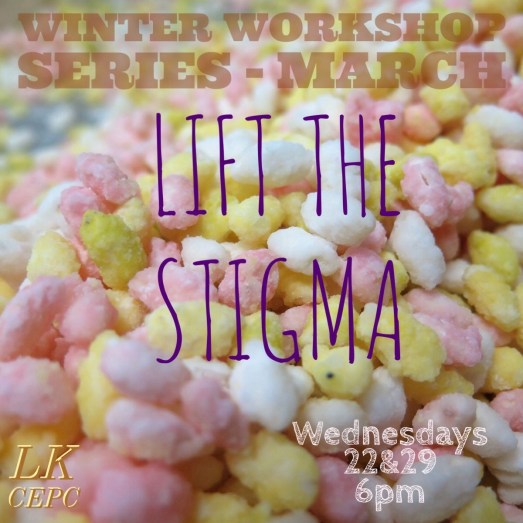
Everyone has a story. In March we’re going to share stories, address the issues and concerns around dieting and body image. We’re going to talk about the diet industry – and what to do about it.
Because Everyone Deserves A Healthy Relationship with Food



 Lisa Karasek, Mind Body Spirit Guidance
You must be logged in to post a comment.